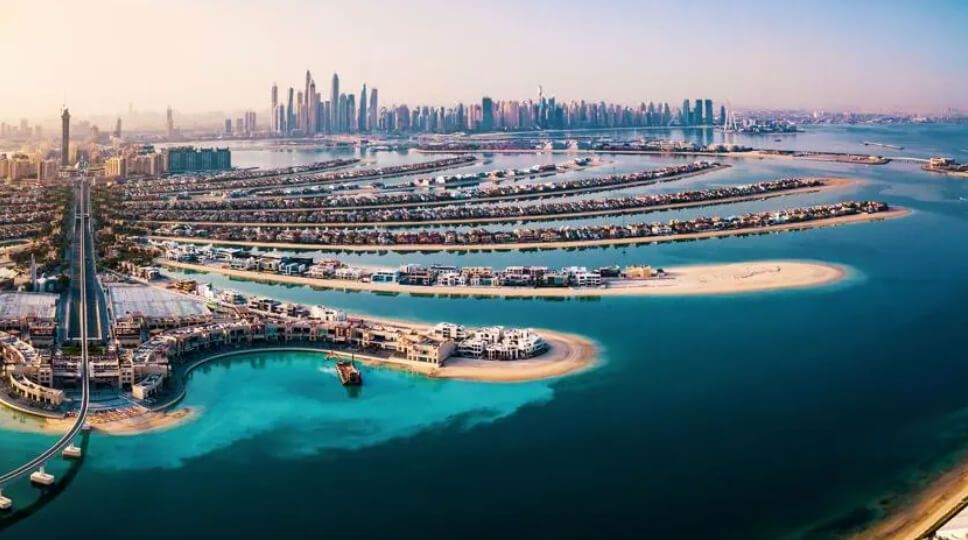
Dubai has become one of the few major cities where a foreign buyer can own freehold property, collect rent with no annual property tax, and apply for long-term residency off the back of the same purchase. That combination is exactly why so many first-time buyers rush in with a headline price in mind — and then get surprised by the numbers that sit underneath it.
This guide walks through what buying property in Dubai actually costs in 2026, what the market looks like right now, how mortgages work for expats and non-residents, and where the Golden Visa rules changed this year.
Where the Dubai property market stands in 2026
The market opened 2026 at record pace. Dubai Land Department (DLD) figures showed roughly AED 252 billion in total real estate transaction value in Q1 alone, a 31% year-on-year increase in value, with the investor base expanding to more than 48,000 buyers.
The picture became more mixed after the first quarter. Analysts reading residential-only data have pointed to softer transaction volumes in the first half compared with the exceptional levels of 2025, while other reports emphasise the record half-year sales totals and a strong off-plan share. Both readings can be true at once — they simply count different things (all procedures vs. residential sales, value vs. volume).
The practical takeaway for a buyer is this: Dubai in 2026 is a segmented market, not a single trend line. Prime villa stock and branded residences have kept climbing. Mid-market apartments in areas with heavy new supply are flatter. Anyone quoting you one growth percentage for “Dubai property” is generalising too far — always ask for the number for your specific community and unit type.
The real cost of buying property in Dubai
The property price is not the budget. Plan for roughly 6% to 8% of the purchase price in one-off transaction costs, most of it payable in cash on transfer day.
| Cost item | Typical 2026 amount | Notes |
|---|---|---|
| DLD transfer fee | 4% of the recorded property value | By market convention the buyer pays the full amount |
| Property registration fee | ~AED 2,100–4,200 + VAT | Tiered by property value |
| Title deed issuance | ~AED 250–580 | Paid at the trustee office |
| Agency commission | ~2% + VAT | Usually waived on direct off-plan purchases |
| Mortgage registration | 0.25% of the loan + admin fee | Only if financing |
| Bank valuation / arrangement | ~AED 3,000–12,000 | Varies by lender |
| NOC from developer (resale) | ~AED 500–5,000 | Seller-side in most deals, but negotiable |
Worked example. On an AED 2,000,000 ready apartment bought with cash and an agent, you should budget roughly AED 130,000–165,000 in fees on top of the price. Buy the same unit with an 80% mortgage and the cash you need at signing is the AED 400,000 down payment plus those fees — comfortably over AED 550,000, not the AED 400,000 many buyers plan for.
What you do not pay is just as important: Dubai has no annual residential property tax and no capital gains tax on individual property sales. Once the transfer costs are behind you, the ongoing cost base is service charges, maintenance, and management fees.
Mortgages for expats and non-residents
UAE resident buyers can typically borrow up to 80% of the value on a first property under AED 5 million, meaning a 20% down payment. Above AED 5 million, and for second properties, loan-to-value caps tighten. Non-resident buyers usually face a lower ceiling — commonly 50% to 65% LTV — and a shorter list of lenders willing to underwrite them.
Three things buyers routinely underestimate:
- Fees are paid from cash, never financed. The 4% DLD fee cannot be rolled into the loan.
- The bank’s valuation rules, not the seller’s price. If the valuation comes in below the agreed price, you cover the gap.
- Early settlement charges apply. Exit fees are regulated and capped, but they are real — read the terms if you plan to refinance or flip.
The Golden Visa property route — what changed in 2026
The 10-year UAE Golden Visa through real estate is tied to a DLD-recorded property valuation of at least AED 2 million.
The meaningful 2026 change is on financing. The old rule of thumb — that an applicant needed a large paid-up equity stake before a visa would issue — was removed in early 2026. A mortgaged property can now qualify once the DLD valuation reaches the threshold, provided the lender issues a no-objection letter confirming the paid amount and outstanding balance. That lowers the cash barrier considerably for buyers using 50–75% financing.
Two practical notes: the valuation certificate (issued from roughly AED 4,020) is what immigration relies on, not the price written on your contract; and lower-value purchases may still support shorter-term residency options rather than the 10-year visa. Because immigration rules are updated frequently, confirm the current criteria directly with GDRFA or DLD before you buy on the strength of a visa expectation.
Rental yields: use the net number, not the gross
Dubai’s headline yields are genuinely strong by global standards, and some high-yield apartment corridors are quoted at 8–9% gross. But gross yield is a marketing number. What lands in your account is net.
Net yield = (annual rent − service charges − maintenance − management fee − vacancy allowance) ÷ total acquisition cost (price + fees).
Service charges are the line item that quietly reshapes returns. They are billed per square foot annually and vary widely — a tower with extensive amenities and an older maintenance profile can charge multiples of what a simple mid-rise charges. Before you commit, ask for the building’s current service charge rate and its history over the last three years, not just this year’s figure.
A realistic net yield in a well-chosen Dubai apartment usually lands a few points below the advertised gross. That is still competitive — it is simply a different number than the one in the brochure.
Off-plan vs. ready property
Off-plan has dominated transaction volume in 2026, and it has real advantages: staged payment plans, lower entry prices, no agency commission on direct developer purchases, and the option to sell before handover.
It also carries risks that ready property does not. Handover dates slip. The finished product can differ from the render. Your capital is committed for two to three years before it produces a single dirham of rent. And if a large volume of similar units hands over in your community at the same time, you may be competing with dozens of identical listings on day one.
Ready property costs more up front but pays rent immediately, and you can inspect exactly what you are buying — including the neighbours, the building’s condition, and the actual service charge bill.
Neither is automatically better. Off-plan suits buyers with a long horizon and no need for near-term income; ready property suits buyers who want yield from month one.
Five mistakes that cost buyers money
- Budgeting the price, not the total. Add 6–8% before you decide what you can afford.
- Ignoring service charges. Two identical units in different towers can produce very different net returns.
- Trusting a single market statistic. Ask for community-level and unit-type data.
- Skipping developer due diligence. Check the escrow account, RERA project registration, and the developer’s delivery record on past projects.
- Buying primarily for a visa. The property should stand on its own as an asset. Immigration rules change; a bad purchase does not fix itself.
Frequently asked questions
Can foreigners own property in Dubai outright? Yes, in designated freehold areas — including Dubai Marina, Downtown Dubai, Palm Jumeirah, Business Bay, JVC, Dubai Hills Estate and many others. Ownership is registered in your name with the DLD and does not require UAE residency.
Is there any property tax in Dubai? There is no annual residential property tax and no capital gains tax on individual sales. Costs are concentrated in one-off transaction fees and ongoing service charges. A 5% VAT applies to some services and to commercial property, not to residential resale.
How long does a transfer take? A cash purchase can complete in roughly two to four weeks once the MOU is signed and the developer NOC is issued. Mortgage purchases typically take four to eight weeks depending on the lender.
Do I need to be in Dubai to buy? Not necessarily. Many transactions are completed through a notarised power of attorney, though some lenders require the borrower to attend in person or complete additional verification.
What is the minimum realistic entry point? Studio apartments in outer communities can start in the AED 600,000–800,000 range, though entry prices move with the market and vary sharply by area and building quality.
Before you buy
Dubai rewards buyers who do arithmetic and punishes buyers who do vibes. Get the total acquisition cost on paper, get the building’s service charge history, get the community-level price data, and get the DLD valuation before you attach a residency plan to a purchase.
This article is for general information only and does not constitute financial, legal, tax or investment advice. Fees, lending caps and immigration rules change; verify current figures with the Dubai Land Department, RERA, GDRFA and a licensed advisor before making any property decision. Figures cited reflect publicly reported data available at the time of writing.






Be First to Comment